
The truth behind tooth yellowing beyond coffee and cigarettes
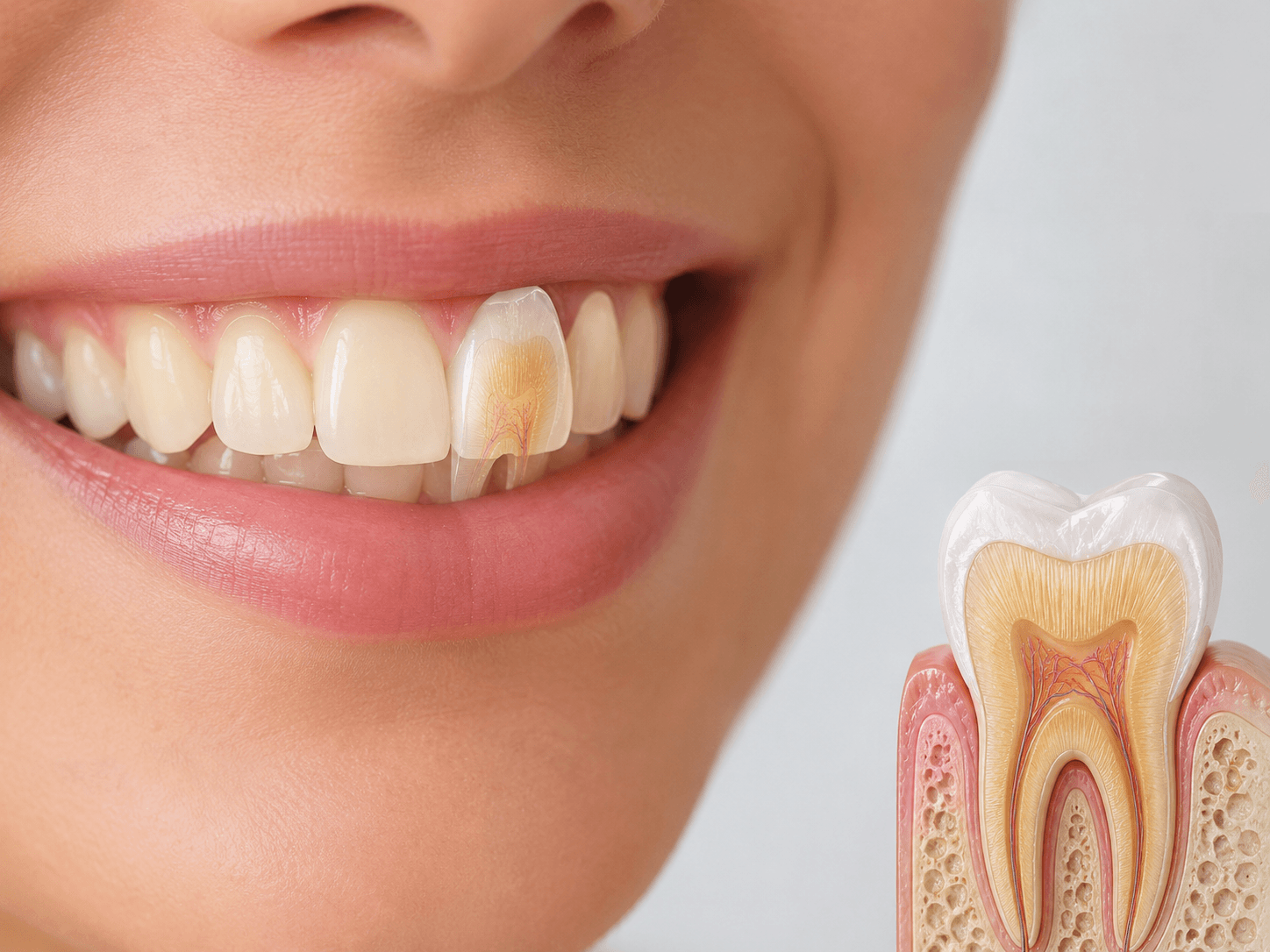
Why is the color of a smile not always under our control? The truth is deeper than we often think. Tooth color is not determined only by what we eat or drink, but by a complex combination of biology, environment, and personal dental history. In many cases, yellowing is not neglect. It is the result of processes that happen inside the tooth and within the body.
1. Yellowing does not happen only on the surface
A tooth is not naturally “white” at its core.
- Enamel, the outer layer, is semi-transparent
- Dentin, the layer beneath it, is naturally more yellow
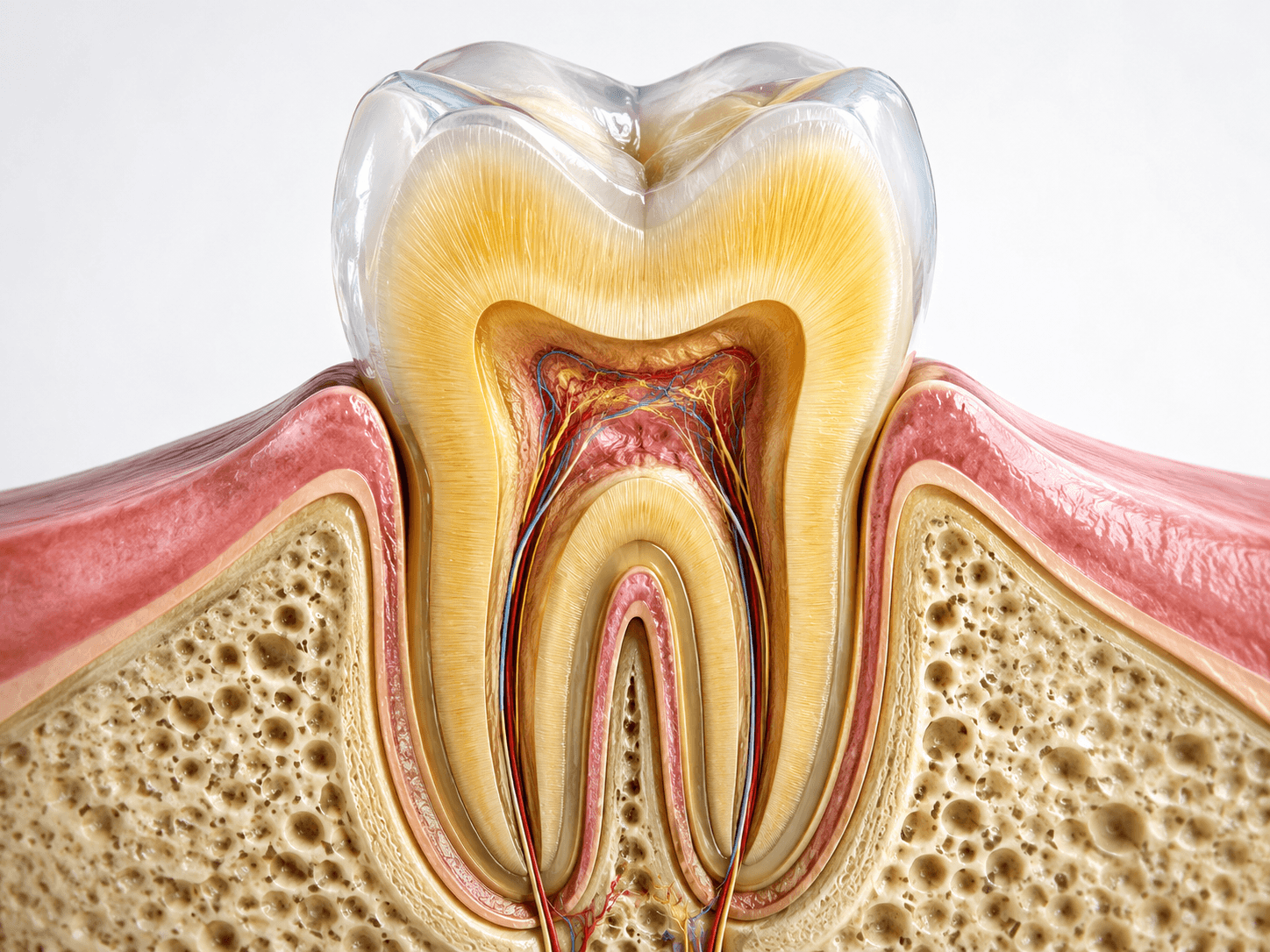
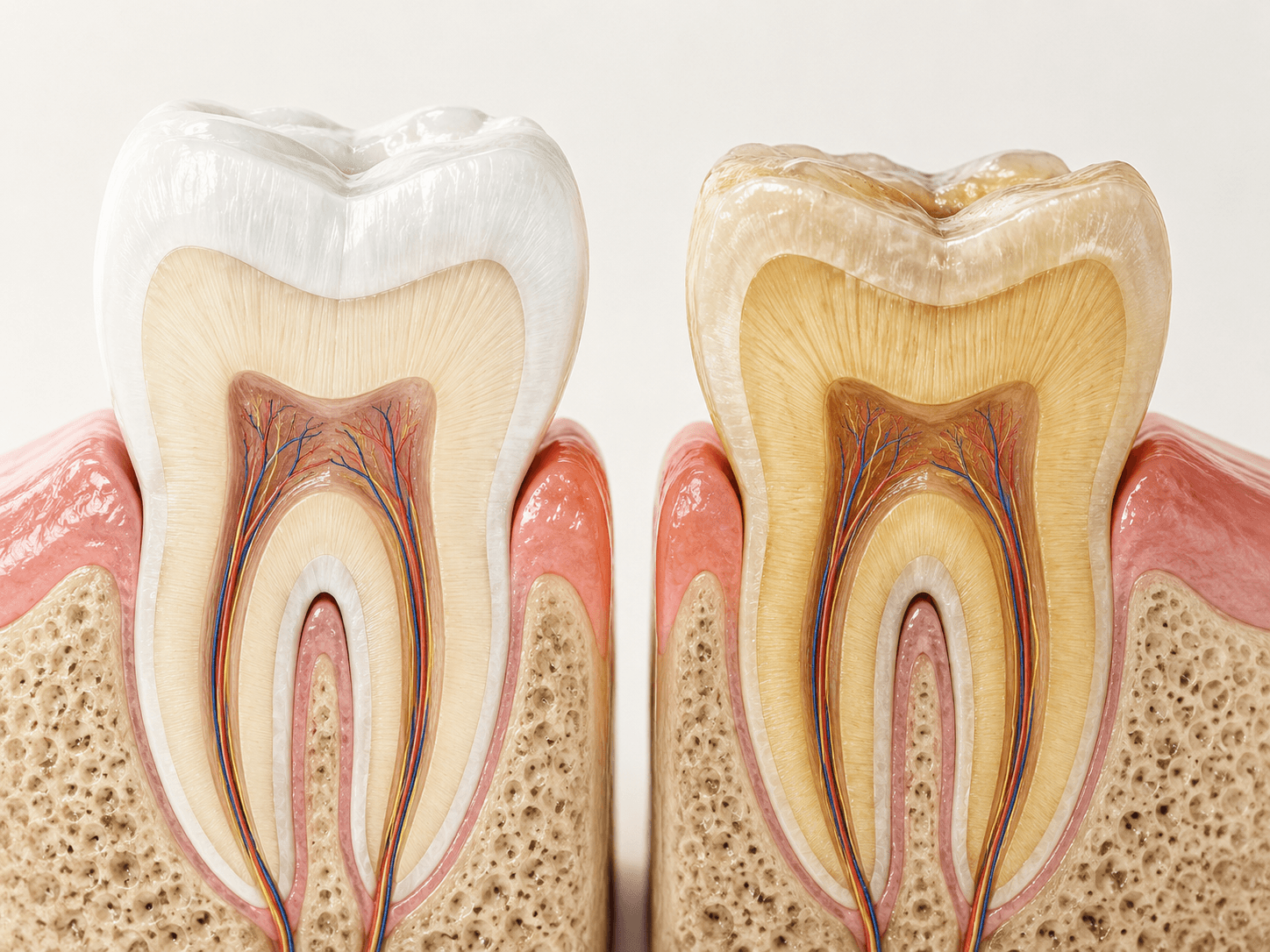
Over the years, enamel becomes thinner because of chewing, acids, and other factors. When this happens, dentin becomes more visible, even in people with very good oral hygiene.
2. Genetics: what we inherit
Some people are born with:
- Thinner enamel
- Naturally darker dentin
This explains why two people with identical habits can have very different tooth shades. DNA plays a key role, and this cannot be changed with a toothbrush or toothpaste.
3. Medications we do not always connect with teeth
Some medications affect tooth color directly or indirectly:
- Antihistamines - dry mouth and more staining
- Some blood-pressure medications - reduced saliva flow
- Antibiotics such as tetracycline - especially in childhood, they can cause permanent internal staining
These changes are not superficial and often cannot be corrected with simple whitening.
4. Teeth grinding
Many people clench or grind their teeth at night without knowing it. This constant pressure:
- Wears down enamel
- Creates microcracks
- Exposes yellow dentin
The result is gradual: teeth look darker and more tired over time.
5. Nutritional deficiencies
Teeth are part of the body and respond to nutritional deficiencies:
- Calcium deficiency weakens structure
- Vitamin C deficiency affects gum health and resistance to staining
Nutrition does not affect only our energy. It also affects our smile.
6. Environmental factors
Some factors work slowly and silently:
- Water with high mineral content
- Excess fluoride exposure during tooth development
- Industrial or occupational substances
These influences are often noticed after many years, when the color change is already visible.
7. Saliva pH
A mouth that is often acidic because of diet, reflux, or stress:
- Makes enamel more porous
- Increases sensitivity to pigmentation
This may seem like a small factor, but it has a major long-term effect.
8. Gastric reflux and stomach acids
Patients with chronic reflux:
- Expose teeth to very aggressive acids
- Experience accelerated enamel erosion
This leads to tooth darkening, often without pain, but with a visible aesthetic change.
9. Previous dental procedures
Some old treatments or trauma can change tooth color from the inside:
- Old fillings
- Endodontic treatments
- Previous dental trauma
These can cause internal darkening of the tooth, which does not disappear with cleaning or standard whitening.
Professional conclusion
Tooth yellowing is not always the result of bad habits. In many cases, it is the result of biology, unavoidable factors, and personal dental history.
Every smile has its own story, and the right solution comes only after professional evaluation, not from universal recipes or uncontrolled whitening.