SLS, or sodium lauryl sulfate, is an ingredient found in many toothpastes. It is not the ingredient that protects teeth from cavities. Its main role is to create foam and help toothpaste spread more easily throughout the mouth while brushing.
For most people, SLS is used without any problem. However, some patients with sensitive oral tissues, recurrent canker sores, or dry mouth may notice more irritation when using toothpaste that contains SLS.
Why is SLS used?
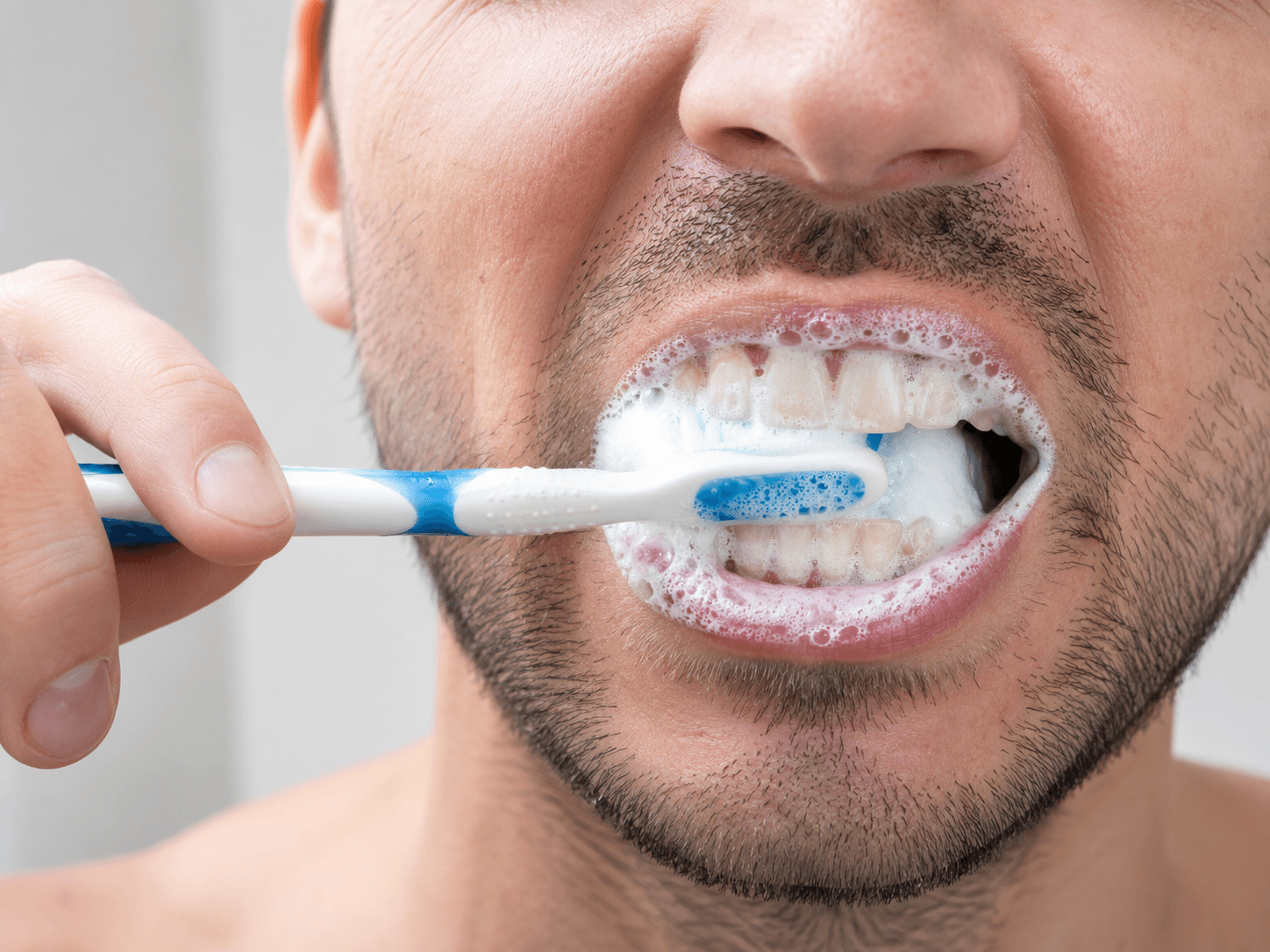
SLS is a surfactant. This means it helps toothpaste mix with saliva and supports the mechanical removal of food debris during brushing.
It is used because it:
- Creates a foaming sensation
- Helps toothpaste spread over the teeth and gums
- Supports removal of surface residue
- Gives the feeling of a more complete clean
Foam does not automatically mean better cleaning. The most important anti-cavity protection comes from fluoride, brushing technique, and consistent oral hygiene.
Is SLS safe?
At the concentrations commonly used in toothpaste, SLS is considered safe for most patients. The concern is not that it damages enamel or teeth, but that it may irritate sensitive oral tissues in some people.
If you feel burning, dryness, redness, or frequent canker sores after brushing, it may be worth trying an SLS-free toothpaste and discussing the symptoms with your dentist.
Possible side effects
Not every patient reacts the same way, but in some people SLS may be associated with:
- Burning sensation in the mouth
- Dryness or mucosal discomfort
- Gum irritation
- Increased sensitivity in patients with recurrent canker sores
- A strong or harsh after-feel after brushing
These symptoms do not always mean allergy. Often, they reflect local irritation or individual sensitivity.
Who may benefit from SLS-free toothpaste?
SLS-free toothpaste may be a better option for patients who have:
- Recurrent canker sores
- Dry mouth or xerostomia
- Very sensitive oral mucosa
- Gums that become irritated easily
- Healing tissues after oral surgery or periodontal treatment
- Burning sensation after using regular toothpaste
In these cases, changing toothpaste may reduce discomfort, but it does not replace a dental evaluation if symptoms persist.
SLS and canker sores
SLS is not considered the single cause of canker sores. Recurrent aphthous ulcers may be related to stress, local trauma, individual predisposition, foods, hormonal changes, or other health factors.
Still, in patients who already get recurrent canker sores, an SLS-free toothpaste may reduce irritation and, in some cases, may reduce the frequency or intensity of episodes.
Does SLS damage enamel, implants, or crowns?
SLS does not damage enamel, implants, veneers, crowns, or fillings. It is mainly a soft-tissue tolerance issue rather than a problem for dental structures.
If you have cosmetic or fixed dental work, toothpaste choice should focus on fluoride content, controlled abrasiveness, and your dentist's recommendation.
How to identify SLS on the label
On the ingredient list, SLS may appear as:
- Sodium Lauryl Sulfate
- Sodium Dodecyl Sulfate
- SDS
If you want a gentler option for the oral mucosa, look for products labeled "SLS-free."
Clinical conclusion
SLS is a functional ingredient that helps toothpaste foam and spread easily. For most people it is safe, but it is not essential for effective cleaning.
If you have frequent canker sores, dry mouth, oral irritation, or sensitivity, an SLS-free toothpaste may feel more comfortable.
The best toothpaste is the one that fits your oral needs, contains fluoride when appropriate, and is recommended by your dentist.